

Bertha Jean “Skipp” Miller Advocates for Brain Injury Survivors
This spotlight originally appeared in the Fall 2020 newsletter.
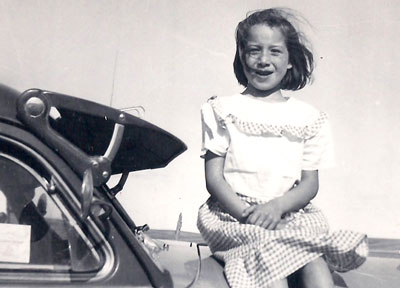 Skipp
Miller, a traumatic brain injury survivor, understands what it means to live with a debilitating injury. In
fact, it is estimated she has experienced 26 concussions/brain injuries throughout her life, which has been
filled with abuse, addiction, love, loss, understanding, and advocacy, for herself and others.
Skipp
Miller, a traumatic brain injury survivor, understands what it means to live with a debilitating injury. In
fact, it is estimated she has experienced 26 concussions/brain injuries throughout her life, which has been
filled with abuse, addiction, love, loss, understanding, and advocacy, for herself and others.
Skipp was born in 1944, on the Flandreau Santee Sioux Tribe, Flandreau, South Dakota, where her parents had earlier attended boarding school. She describes herself as a mix blood Native American. Her mother was Turtle Mountain Chippewa and Fort Peck Dakota-Sioux, and her father was Oklahoma Seneca and Omaha. When she was young the family moved to the Omaha Reservation, Macy, Nebraska. When Skipp was four, her parents divorced and she moved to a ranch north of Williston, North Dakota, to live with her grandparents. Her grandparents would remain a strong presence in her life.
In Williston, Skipp attended Catholic school and attended through 8th grade when her mother remarried. Both were alcoholics and had an abusive relationship, something that would mirror many of Skipp's future relationships.
Injury and Addiction
The first time Skipp distinctly remembers being hit in the head was by a horse on her grandparents' ranch. She remembers petting the horse's muzzle and being a curious young lady bit the horse on his muzzle! The horse reacted by head-butting her hard, she remembers seeing stars.
By age 16, she was drinking and driving with a group of friends when they were in a car accident in Watford City, North Dakota. She remembers very little about the accident itself, but remembers waking up in the hospital, in a hallway. She recalls a nurse asking her to say her name, and date of birth. She was then asked to walk a few steps, did so, and was discharged into her mother's care. She recalls her mother forcing her to drive a few days later and being very frightened. She said her mother had not wanted her to fear driving.
After this accident, Skipp started drinking more heavily and was eventually placed in the state hospital in Jamestown, North Dakota, where she lived for a year or two. She remembers not wanting to go back home with her mother after she was discharged, but had no other place to go.
Shortly after this experience her mother got a job in Boulder, Colorado, so they moved.
While living in Colorado, she had at least three more car accidents by the time she was 22. Her memory of them is foggy at best. The first time something seemed off, was during her time on a bowling league.
“Resuming my bowling was difficult,” Skipp remembers. “I didn't know how to walk up the lane and roll the ball.” She eventually quit the league. She also noticed having a hard time going back to work at a local dry cleaner. The coordination between her hands and feet was never the same.
It was immediately following the third accident in Colorado when a doctor told Skipp that she needed to quit drinking because it could lead to depression on the brain. Her mother had relocated to Everett, Washington, and two months after being released from the hospital, she moved to be closer to her mother. At the time, her mother was working as a bartender and, not having any friends her own age, she would often spend evenings visiting her mom at the bar.
Abuse
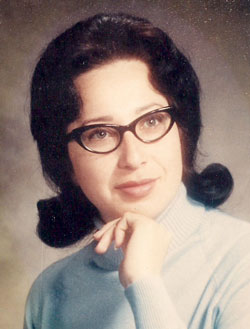 Her
first significant relationship began in Everett, at the age of 23, with Bob. Similar to her parent's
relationship, alcohol and abuse were prevalent. She stayed with Bob for over two years, during which her
daughter was born. Skipp and Bob moved to Berthoud, Colorado, and had “no communication between us, we just
existed, day to day.”
Her
first significant relationship began in Everett, at the age of 23, with Bob. Similar to her parent's
relationship, alcohol and abuse were prevalent. She stayed with Bob for over two years, during which her
daughter was born. Skipp and Bob moved to Berthoud, Colorado, and had “no communication between us, we just
existed, day to day.”
Upon hearing her grandfather was ill, Skipp brought her daughter to visit the family in Williston, North Dakota. Her grandparents brought her back to Bob, but found he was in a relationship with another woman, so they separated. Skipp lived as a single working mother, holding a job at a dry cleaners. Bob returned one day, and Skipp said she wanted a divorce. They had not been legally married, but by Colorado law, they were considered to have a common law marriage. Bob hit her and broke her nose. The hospital released her into his care. The next day Bob left, and she never saw him again, though she feared he would return and take her baby girl.
Skipp got a good job working at the IBM plant in Loveland, Colorado, putting personal computer boards together. Despite the good wages, she did not like the work. Soldering and placing the wires was very exact and detailed work. She met a new friend and many weekends were spend at local bars or in Denver, Colorado, dancing and drinking. She began missing work and was let go from IBM. Unable to collect child support from Bob, Skipp went on welfare and fell into a deep depression.
Skipp and her daughter moved to Denver, made a few friends, and started school at an Indian center and worked on obtaining her GED, since she never finished school beyond 8th grade. She discovered she possessed a skill for typing and secretarial work and could type 80 words per minute (wpm) on a typewriter. To practice, she would listen to records and type the song lyrics, keeping up with the music. When the Indian center brought in an IBM computer, she was able to type 100 wpm. Eventually she noticed her typing and secretarial skills would begin to slow down.
Then she met her next significant relationship, Frank. After she gave birth to their son, she found out he was abusive when he drank alcohol. Again, their relationship mirrored her parents. She took her daughter and newborn son and moved into low-income housing in downtown Denver. One evening Frank appeared and began hitting her with his fists. A friend called 911. The hospital wanted to operate on her face, but it was too swollen. The left side of her face was smashed in. Once the swelling reduced, they were able to reform her cheekbones, her nose was completely shattered, and her orbital sockets were broken.
When Frank tried to visit Skipp in the hospital, she stood up for herself and said “no”. She took her children and moved back to North Dakota to be with her grandmother. Frank was caught by police, as he had threatened to kill her, and she was called to testify. A victim's advocate went to the trial with a terrified Skipp. Only able to go off the police report, he was charged with assault and battery and served 30 days in jail.
A New Life
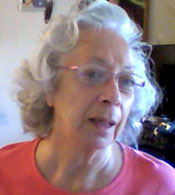 Skipp
tried to move on from this experience, living between Colorado and North Dakota, with her children, and had a
third child, a son. While working at an alcohol treatment center for Native Americans she found she could
identify with the patients. And she was able to remain sober during her time there. She ended her current
relationship and enrolled at Auraria Community College working toward a degree in word processing. After a while
she returned to North Dakota and enrolled at Williston State College, a two-year community college. She was able
to receive financial aid to help pay for college.
Skipp
tried to move on from this experience, living between Colorado and North Dakota, with her children, and had a
third child, a son. While working at an alcohol treatment center for Native Americans she found she could
identify with the patients. And she was able to remain sober during her time there. She ended her current
relationship and enrolled at Auraria Community College working toward a degree in word processing. After a while
she returned to North Dakota and enrolled at Williston State College, a two-year community college. She was able
to receive financial aid to help pay for college.
It was during this time she noticed her drawing ability and penmanship had diminished. At Williston State College, she took a class in psychology and found her passion. In 1990 she took a leap and moved to Minot, North Dakota, to study addiction psychology at Minot State University. The next few years were filled with tragedy. Skipp’s beloved grandmother passed away, and her oldest son was killed. Like many who suffer loss, she grieved and experienced strong emotions, but adding to this was a mental confusion. Through all of this she stayed in college, but started having trouble with her balance, and began having difficulty in her classes. Noise in the classroom made it hard to concentrate, reading assignments were difficult, and she had a hard time finding the words to answer questions from her professors.
Then a gerontology professor approached Skipp, regarding a paper she had turned in, and asked if she’d ever been hit on the head. She shared her years of injuries and she finally was given a battery of tests that proved a brain injury. Minot State University was able to assist her with a tutor and notetaker. She was allowed to take exams in a separate, quiet room. These assistive actions allowed her to graduate with a bachelor’s degree in 1994. Starting with only an 8th grade education, to achieving a college degree, was no small feat. Skipp’s perseverance and belief in herself had paid off.
Advocacy
Skipp turned her attention to helping others. She helped organize the Indigenous People’s Brain Injury Association. She spent the next decade working to help people with disabilities, and Native American students, in western North Dakota. She had the innate desire to support others, and to make their lives better.
She started a support group for people with brain injuries, allowing a place where others could go for encouragement. At the age of 66, she decided she needed to retire.
Skipp continues to have falls regularly and recently her son told her he thinks her communication has gotten worse since a bad fall two years ago. Her 26 head injuries continue to amaze medical professionals that she meets. Her children struggle with understanding her injuries. She stopped drinking 38 years ago.
Skipp has been involved with advocacy work regarding brain injuries in North Dakota. She is thrilled with the advances that she has seen throughout her lifetime in this area. She credits the majority of this to the work of Rebecca Quinn and the North Dakota Brain Injury Network (NDBIN). She was a member of National Alliance on Mental Illness, where she spoke nationally to groups on abuse and mental illness. She is currently a member of North Dakota’s Brain Injury Advisory Council to the governor. She also helped bring NDBIN to New Town, North Dakota, for a day of learning related to brain injury resources.
With all the good work she continues to do to help others, Skipp still struggles daily. She misses the independence of driving. She has been diagnosed as having post-traumatic stress disorder, manic depression, suicidal ideations, major depression, and mood disorders. Currently she identifies with the labels of seasonal affective disorder, major depression, peripheral neuropathy and traumatic brain injury. She has tinnitus, a constant ringing in her ears. Certain sounds bother her, such as the microwave when it is done. She wears ear plugs when she goes out, to block out sounds around her. When she watches television, she uses the closed captioning setting. She does not typically socialize with others. She struggles with the guilt of how her children were raised in the past on a daily basis. She wishes she was “visible, vocal, and more stable” than she is now.
Thank you Skipp for sharing your experiences and for all you do to advocate for survivors of brain injuries.